
Continued
Modernizing product infrastructure and workflows for scale, usability, and cross-surface consistency
Shipped and now live across 5 verticals: Counseling, Massage Therapy, Psychology, Respiratory Therapy, and Social Work
Foundation & Scope
Context
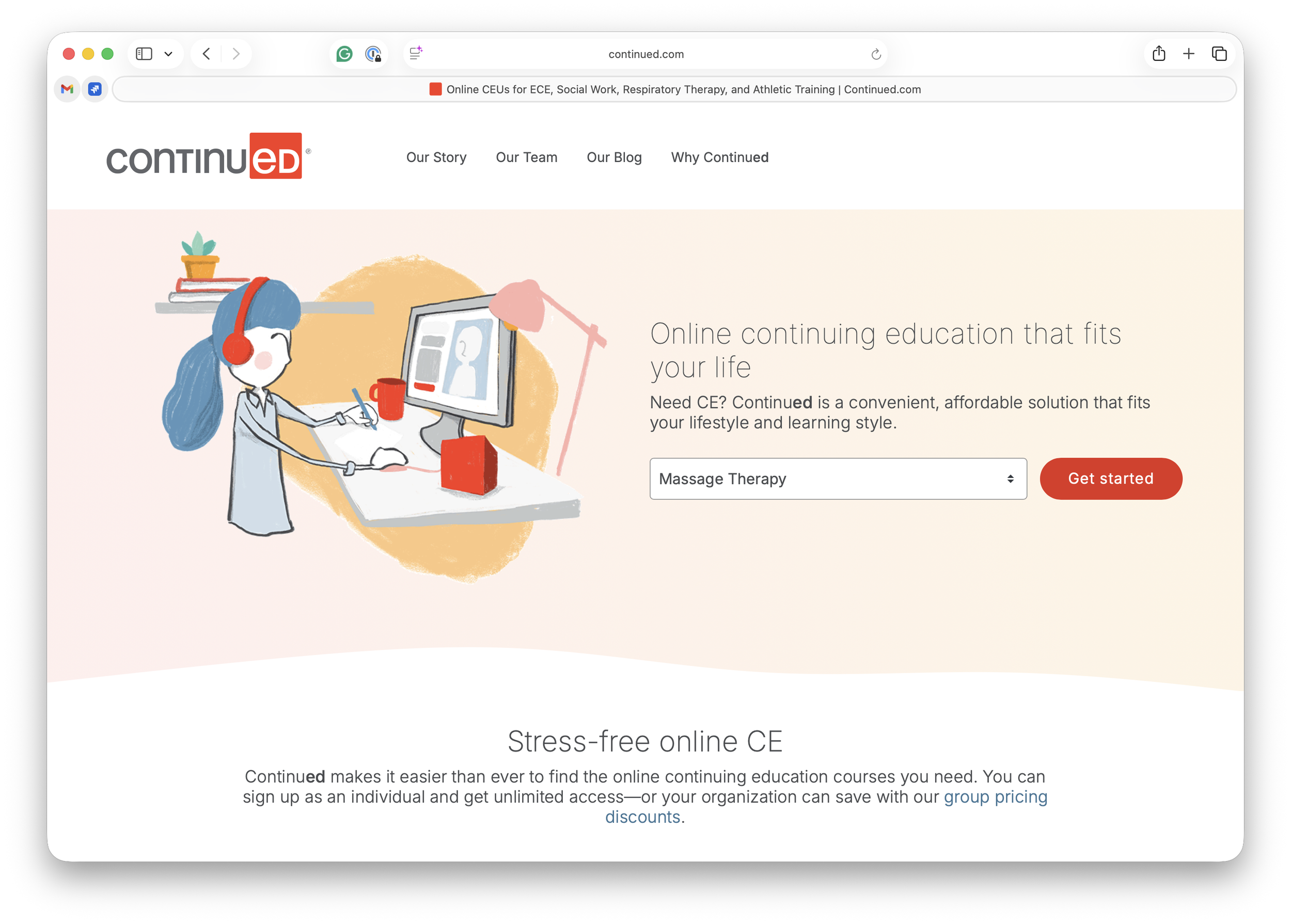
Continued is a learning platform that provides continuing education (CE) courses to healthcare professionals. Over two years, I led UX efforts to modernize the platform and define scalable patterns that support both internal admin workflows and external learner journeys. The redesign was prioritized to reduce operational friction, improve usability, and prepare the product for new vertical expansion.
My Role
I was the first designer hired for Continued’s core redesign — owning strategy, decision-making, and execution across internal admin tools and the customer learning dashboard. I partnered with Product and Engineering to align design outcomes with product goals and regularly presented work to stakeholders. I was also active in research, the development of the design system, driving accessibility improvements, and developer handoff.
Role:
Time Frame:
Tools:
Platforms:
Team:
Product Designer
2 years
Figma, Jira, Maze
Desktop, Tablet, Mobile
20+ developers, 4 designers, 2 PMs, QA
Key Problems
Internal workflows required excessive steps and manual workarounds
UI patterns were inconsistent across tools, slowing down design and development
Customer-facing dashboards lacked clear hierarchy and accessible navigation
Key Decisions & Design Strategy
Scaling the Design System
Rather than building isolated UI components, I evolved the design system to support consistency and scale across both internal tools and customer-facing products. This included adding WCAG-aligned states (focus, disabled, loading), flexible multi-select patterns, and foundational components that reduced duplicate solutions.
Outcome: These changes improved design consistency and shortened (or eradicated) many conversations between engineering, QA, and UX.


Simplifying Internal Workflows
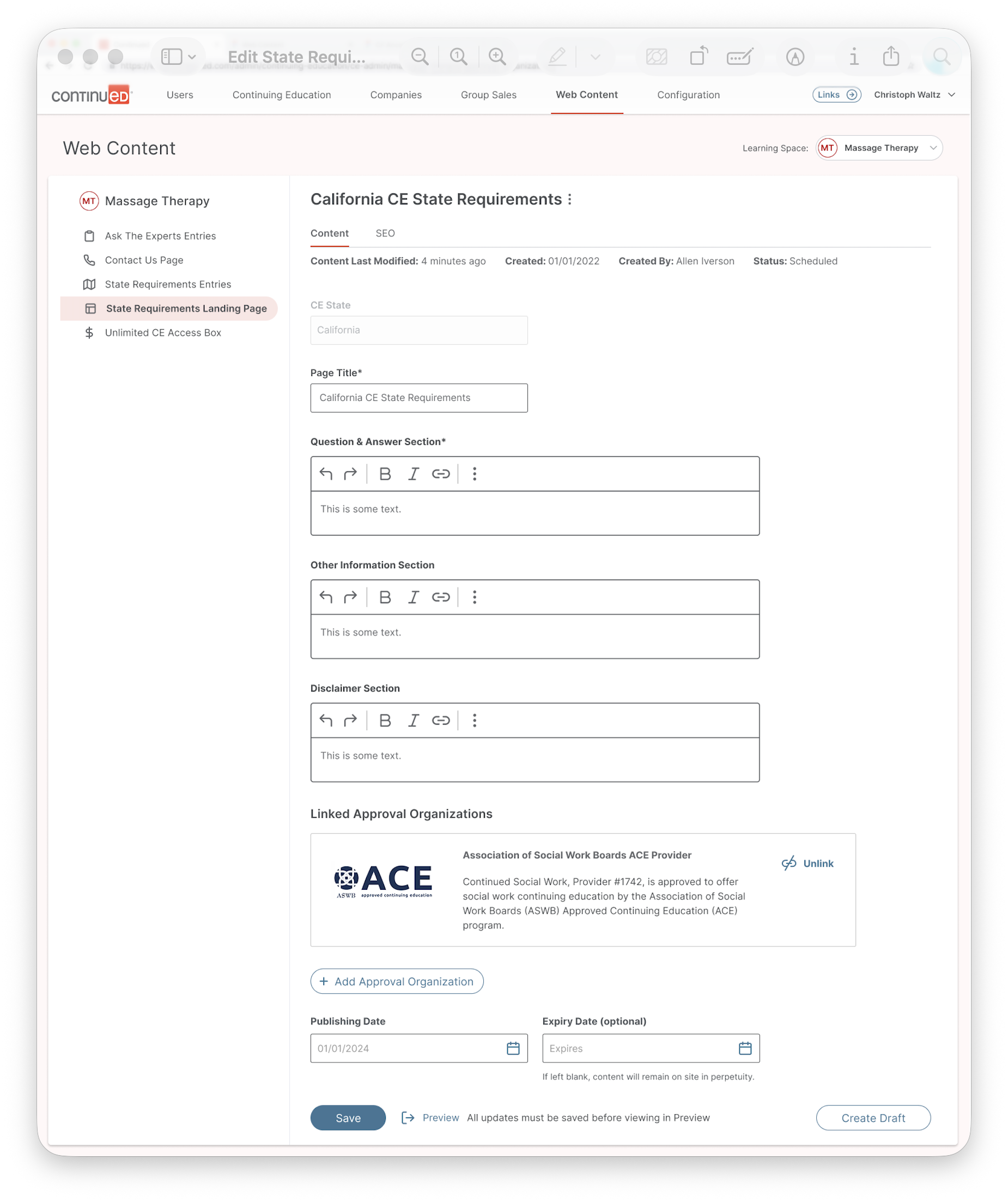
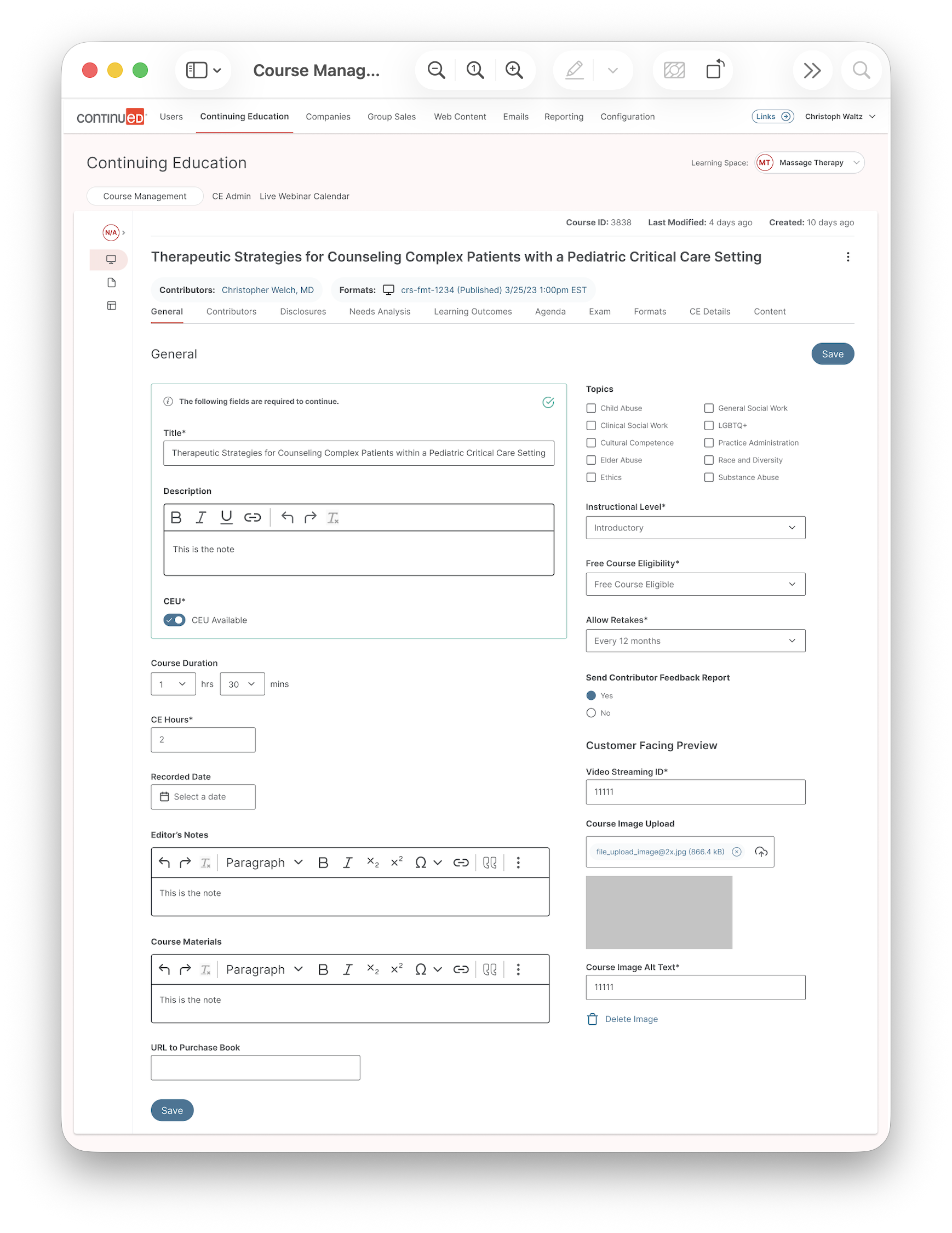
I initially approached the admin experience with a mobile-first mindset. Early user research and usage patterns revealed that the majority of workflow activity occurred on desktop. Based on this insight, we shifted focus to prioritize scalable desktop layouts while maintaining responsive breakpoints for smaller viewports.
With the primary device context clarified, I analyzed existing admin workflows and identified redundant steps, fragmented information, and unnecessary confirmations that slowed task completion. I consolidated overlapping flows, clarified action hierarchy, and streamlined high-frequency tasks to better align with how employees actually completed their work.
Result: A redesigned internal interface that reduced task completion time by 40%, significantly improving day-to-day efficiency for employees.
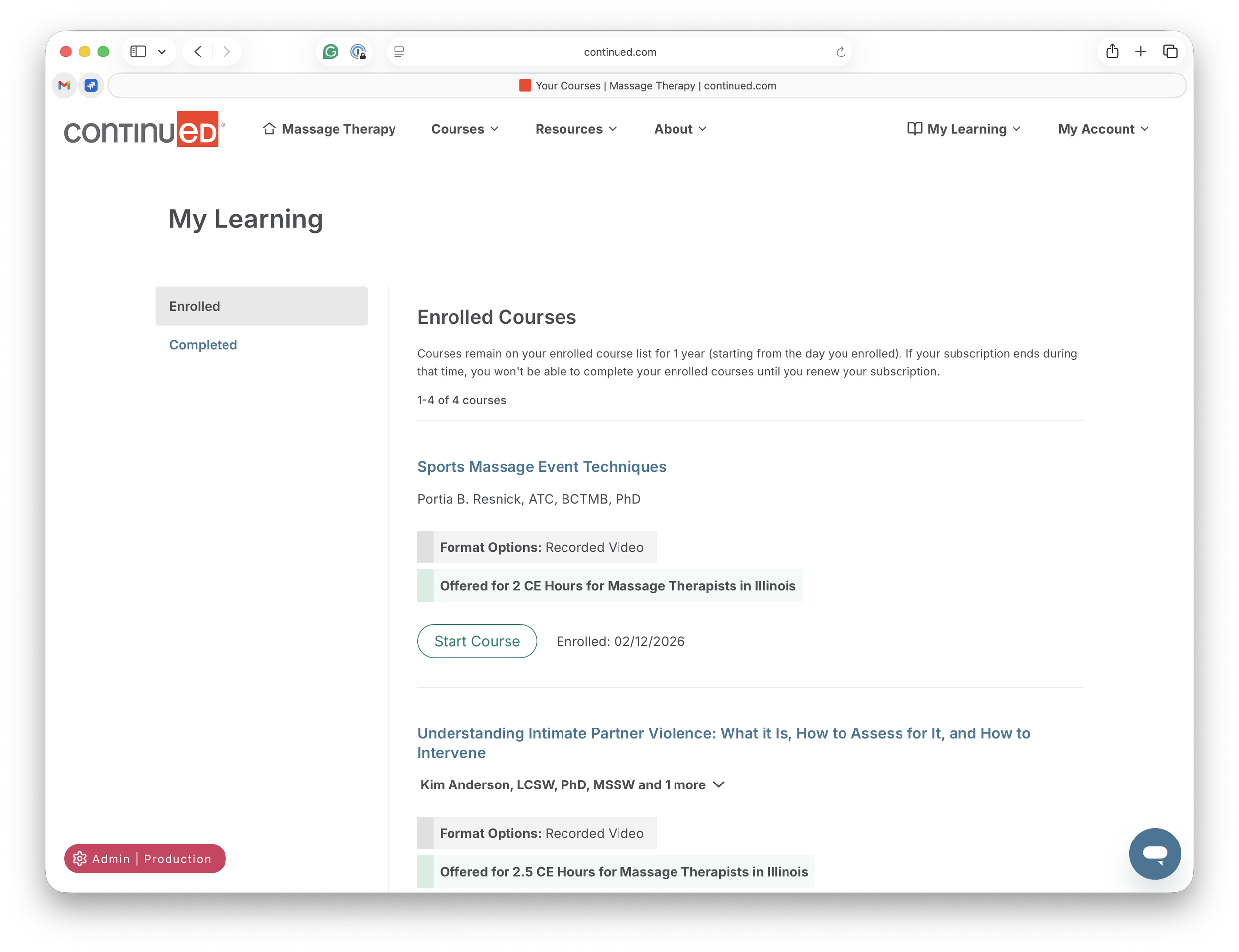
Improving the Learning Dashboard
For the customer learning dashboard, I focused on information hierarchy and navigation clarity, ensuring users could quickly understand their progress and next steps.
Design decisions were informed by usability testing and accessibility standards, with an emphasis on clarity over visual complexity.
Customer Feedback: “The website seemed well organized and easy to use… with the simple menu on the left side of the page and the main content that I can scroll through directly in the middle of the page.”
Outcomes & Impact
Validation & Iteration
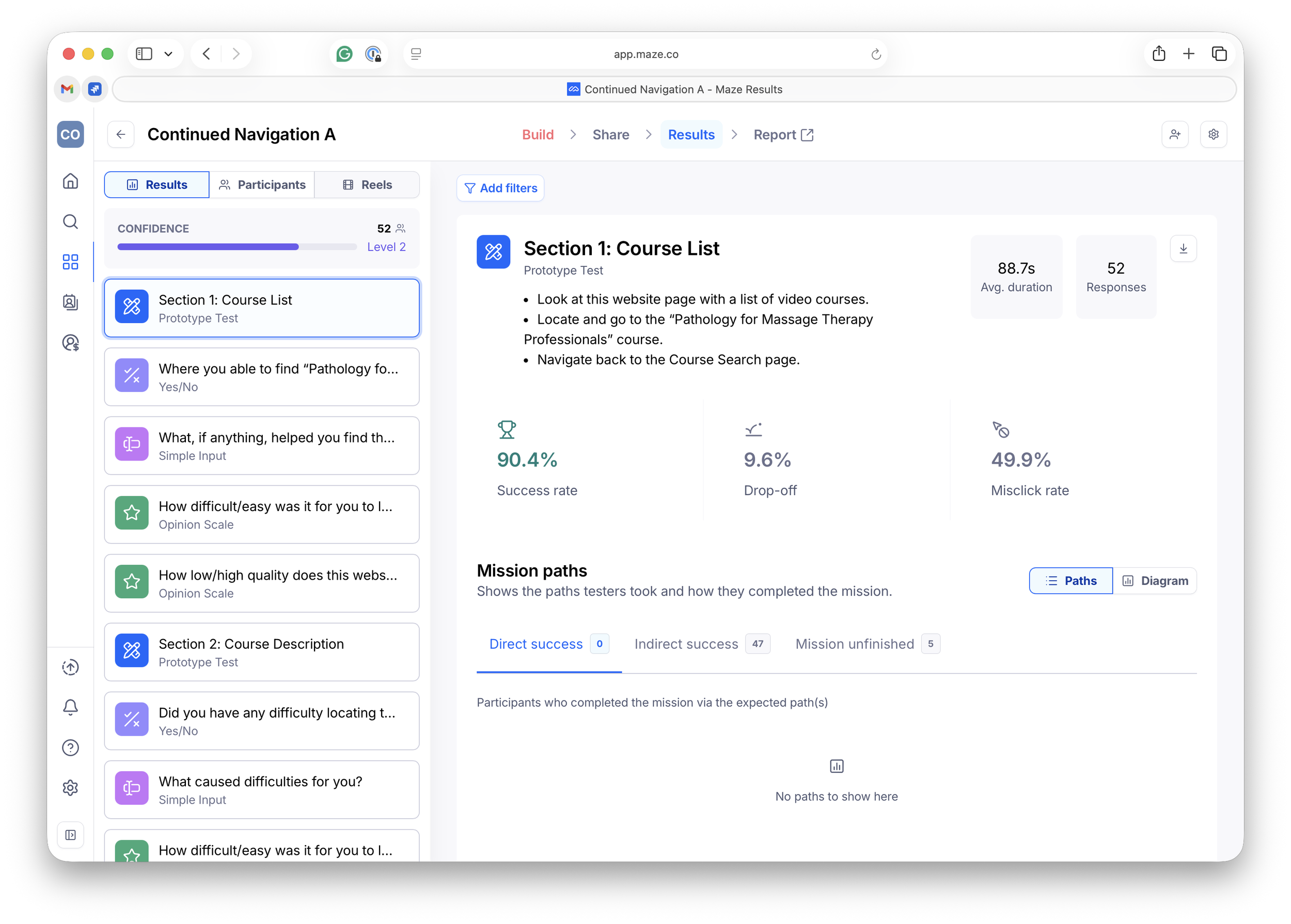
Conducted 1:1 usability testing via Zoom and Google Forms in addition to A/B experiments on Maze with ~90 participants to validate user flow changes
Partnered with stakeholders to review findings and adjust scope based on impact
Iterated on designs post-launch based on user feedback and team insights
Impact
Reduced internal task completion time by 40% (according to internal surveys and Pendo data), significantly improving daily workflows for employees
Established reusable design patterns that enabled faster feature development and reduced one-off design solutions
Improved cross-team alignment (with Engineering + Marketing) through consistent UI standards and shared component usage
Implemented accessibility improvements aligned with WCAG standards (contrast, focus states, keyboard interaction)
I also completed Deque University’s Accessibility course while working on this project
Reflection
This work reinforced for me that systems thinking often matters more than following linear design ideologies. While I typically approach problems through structured frameworks like the Double Diamond, this project required continuous reassessment and iteration rather than linear discovery. By prioritizing scalable patterns over isolated feature fixes, I was able to reduce mental load for employees and customers while building a foundation that continues to support new enhancements as the product evolves.
Note: Some details have been omitted or altered to protect confidential information.